
Getting new dentures can bring a mix of relief and uncertainty. You may feel glad to have a full smile again, but the first few days can also feel awkward. Your mouth needs time to adapt. Your muscles need practice. Everyday tasks like eating and speaking may feel different at first, even if your dentures fit well.
That adjustment period is normal. Most people need a little time to feel comfortable with new dentures, and small changes in routine can make the process much smoother. If you’re considering dentures in Utah, we’re here to help you prepare for the process. If you know what to expect and how to respond, you can settle in faster and avoid a lot of frustration.
Give Your Mouth Time to Learn
Your dentures may feel bulky at first. That sensation usually fades as your cheeks, tongue, and jaw learn how to work with them. Think of it like breaking in a new pair of shoes. The fit may be correct, but your body still needs time to adjust to something unfamiliar.
You may also notice extra saliva at first. That happens because your mouth treats the dentures as something new and responds by producing more saliva. This usually improves within a few days. Swallowing more often and staying relaxed can help you get through that stage without overthinking it.
Soreness can show up, too, especially in the early days. A little tenderness is common while your mouth gets used to the pressure. Sharp pain, persistent rubbing, or sore spots that keep getting worse deserve attention from your dentist. Dentures should improve your comfort, not create ongoing pain.
Start with Softer Foods
Eating with new dentures takes practice. The easiest way to build confidence is to start with foods that don’t require much force or chewing. Soft foods let you focus on learning the motion without dealing with hard textures or sticky bites.
Try foods like scrambled eggs, yogurt, oatmeal, mashed potatoes, pasta, soup, soft fruit, or cooked vegetables. Take smaller bites than usual and chew slowly. It also helps to chew on both sides of your mouth simultaneously. That keeps your dentures more balanced and reduces the chance of tipping.
As you get more comfortable, you can work your way toward foods with more texture. For example, you might move from mashed potatoes to baked potatoes, then to softer meats or sandwiches cut into small pieces. Progress usually feels steadier when you stop trying to test your dentures with the hardest foods right away.
Practice Speaking Out Loud
Speech often feels off at first with new dentures. Some words may sound different. You might notice a slight lisp, or your mouth may feel clumsy when you try to speak quickly. That part of the adjustment usually improves faster than people expect, especially if you practice.
Reading out loud is one of the best ways to get used to speaking with dentures. You can read a book, an article, or even your grocery list. Focus on slowing down and repeating words that feel tricky. Your tongue and lips will adapt with repetition, and your confidence will grow with it.
Keep Up with Cleaning and Daily Care
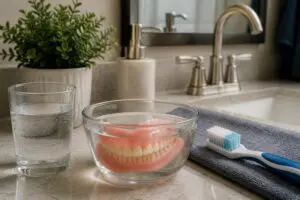
Clean dentures feel better and last longer. Daily care also helps protect the tissues in your mouth. Food particles and plaque can accumulate on dentures just as they do on natural teeth, so consistent cleaning is important.
A simple routine works best:
- Rinse your dentures after eating when possible.
- Brush them daily with a denture brush and a denture cleaner.
- Clean your gums, tongue, and any remaining natural teeth each day.
Handle your dentures over a folded towel or in a sink filled with water. That gives you a little protection if they slip from your hands. Dentures can break if they hit a hard surface, and small cracks can affect the fit.
If your dentist gave you instructions about wearing dentures overnight or taking them out while you sleep, follow that guidance closely. Resting the tissues in your mouth can help reduce irritation and improve comfort.
Pay Attention to Fit Changes
New dentures often need small adjustments. That doesn’t automatically mean something is wrong. Your mouth changes shape slightly as it settles, especially if you recently had teeth removed. Dentures that felt fine on day one may start rubbing in one spot a week later.
If you notice sore spots, slipping, clicking, or trouble keeping the dentures stable while eating, make a note of when it happens. That kind of detail helps your dentist identify what needs adjustment. Try not to fix the denture yourself or rely on over-the-counter adhesives as a long-term answer if the fit seems off.
A good comparison is a pair of eyeglasses that sit crooked on your nose. You can still wear them, but the small discomfort will keep distracting you until the fit is corrected. Dentures work the same way. Minor refinements can make a major difference in how they feel every day.
Build Confidence Gradually
It helps to lower the pressure on yourself in the first week or two. You don’t have to master everything immediately. Give yourself space to practice at home before expecting your dentures to feel completely natural in public settings.
Choose low-stress situations first. Eat simple meals at home. Practice speaking alone or with family. Smile in the mirror until the dentures feel familiar. These small moments help you settle into your new routine without feeling self-conscious.
If you feel frustrated, remind yourself that adjustment is part of the process. Most denture wearers go through a learning curve. What feels awkward today often feels much easier after a little repetition and a proper follow-up adjustment.
Know When to Reach Out
You can expect some discomfort early on, but ongoing pain shouldn’t be part of the plan. Reach out to your Layton dentist if you have sore spots that don’t improve, trouble chewing even soft foods, or dentures that move too much during normal use. Those issues often improve with a simple adjustment.
You should also call if your dentures crack, suddenly feel loose, or continually irritate your mouth. Waiting too long can make a small problem harder to fix and can make the adjustment period more tiring than it needs to be.
Settling into new dentures takes patience, practice, and a few smart habits. Once your mouth adapts and your fit is perfect, wearing dentures every day can feel as natural as breathing.