
Losing a tooth changes more than your appearance. Over time, a missing tooth affects how you chew and speak. Eventually, the surrounding teeth shift to fill the space. Those changes can keep building, which is why many patients choose to restore the gap sooner rather than later.
A dental bridge is one of the more reliable options for replacing a missing tooth. For many patients, it offers a practical, lasting solution. That said, a bridge works best when the right conditions are in place. Understanding what your Utah dentist looks for during an evaluation can help you go into your appointment with clearer expectations.
How a Dental Bridge Works
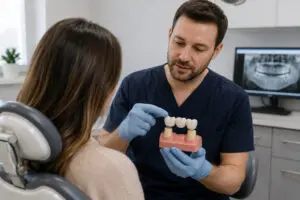
If you’re missing one or more teeth, a dental bridge fills the gap left by the empty spaces. It anchors to the natural teeth on either side of the space, called abutment teeth, using custom-made crowns. A false tooth, called a pontic, is secured in the middle and spans the open space.
Unlike removable partial dentures, a bridge is cemented in place. It stays secure during eating, speaking, and everyday activities. Because the bridge depends on those adjacent teeth for support, their health and structure play a big part in whether this approach is a good fit for your situation.
Signs You May Be a Good Candidate
Several factors mean a dental bridge could be the right option for you. While your dentist makes the final recommendation after a full evaluation, patients who tend to do well with bridges generally have some of the following characteristics:
- One or more missing teeth that are adjacent to each other, rather than scattered across the mouth
- Healthy gum tissue with no active infection or signs of gum disease
- Adequate tooth structure on the neighboring teeth so they can reliably support crowns
- Sufficient bone density in the jaw near the site of the missing tooth
Timing also plays a role. Patients who address tooth loss relatively soon after it happens tend to have better bone density at the site. Waiting longer can cause the jawbone in that area to lose volume, which may affect the restorative options available.
Oral hygiene habits are another important factor. Keeping a bridge clean requires daily attention, particularly around the area where the pontic meets the gumline. Patients who already floss regularly and brush carefully tend to have an easier time maintaining the restoration. A floss threader or water flosser can help you reach under the bridge as part of your daily routine.
What Your Dentist Checks Before Making a Recommendation
A bridge evaluation involves more than examining the gap itself. Your dentist looks at the overall health of your mouth before making any recommendations.
Gum health is one of the first things assessed. Gum disease weakens the bone and soft tissue that hold teeth and restorations in place. When active gum disease is present, it has to be treated and brought under control before bridge work can begin. Placing a bridge in an unhealthy environment can limit how well the restoration holds up over time.
Your dentist will also look closely at the teeth on either side of the gap. These abutment teeth hold the bridge in place, so they need to be structurally sound. If you have cavities, deep cracks, or significant wear, they may need to be taken care of before those teeth can reliably anchor the restoration.
X-rays give your dentist a clearer picture of what’s happening below the gumline. They’ll look at bone density, root health, and any developing issues that aren’t visible during a visual exam. Bone density at the site of the missing tooth is especially important. The jawbone tends to lose volume in areas where teeth are absent, and adequate bone generally supports a better long-term outcome for the restoration.
Your dentist may also review your medical history as part of the evaluation. Certain health conditions and medications can affect healing and how well restorations integrate with surrounding tissue, so a full picture of your overall health is part of making an accurate recommendation.
When a Bridge Might Not Be the First Step
A dental bridge is a dependable restoration, but it works best when the surrounding tissue is stable and the supporting teeth are in good condition. Some situations call for other treatment first.
Active gum disease is the most common reason bridge work gets delayed. Stabilizing the tissue and addressing the infection creates a healthier foundation. Once that foundation is in place, a bridge becomes a more viable option. Teeth with advanced decay or significant structural damage often require treatment before they can reliably support a bridge.
When tooth loss is spread across the mouth rather than confined to one area, your dentist may want to explore whether implants, a partial denture, or a combination approach is a better fit for your situation than a traditional bridge. In those cases, your dentist will walk you through the reasoning and help you understand what a realistic timeline looks like.
How Long a Dental Bridge Tends to Last
With consistent care, many dental bridges last 10 to 15 years, and some last longer. The lifespan depends on factors including oral hygiene, bite forces, and the ongoing health of the supporting teeth and gums.
Cleaning under the pontic every day helps prevent plaque from collecting in an area that’s difficult to reach with a standard toothbrush. A floss threader or water flosser makes this step easier. Patients who make this part of their daily routine give the restoration a better chance of staying in good shape.
Regular dental visits also support the bridge. Your dentist checks the fit and condition of the bridge at routine appointments and can catch early signs of wear or loosening before they become more serious problems.
What To Expect From the Evaluation and Placement
Most bridge evaluations happen during a standard dental appointment. Your dentist will review your dental and medical history, take X-rays, and conduct a thorough exam of your gums and existing teeth. Some patients need a follow-up appointment before a full recommendation can be made.
If your dentist recommends a bridge, it will typically take two to three visits to place the bridge. At the first appointment, the abutment teeth are shaped and prepared for crowns, and a temporary bridge is placed while the permanent one is being made.
At the final appointment, your dentist will adjust the bridge for your bite and make sure it’s fitted perfectly. Finally, they’ll cement it in place.
Talking With Your Dentist About Your Options
The most reliable way to know whether a dental bridge is right for you is to schedule an evaluation with a dentist who can review your specific situation. Your Layton dentist can examine your oral health, explain your options, and help you understand what the process would look like based on what’s actually happening in your mouth.